Shared Decision Making Tool for Defibrillator Implantation

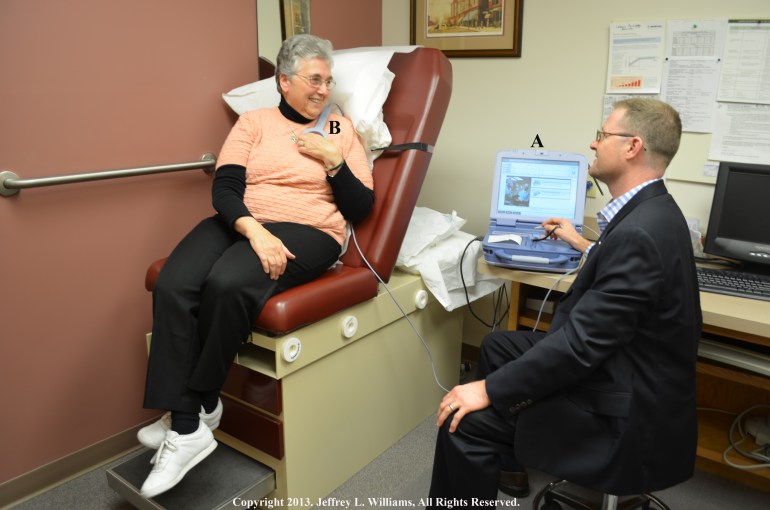
This shows a typical office visit for a defibrillator check (called interrogation). The programmer (A) has all the software necessary to check and program the defibrillator (or pacemaker). Many devices allow wireless interrogations but many still require a wand (B) that is held over the pacemaker to communicate with the device. Part of the shared decision making process is ensuring patients understand the long-term followup required after device implantation.

What is a Defibrillator? Cardiologist’s Guide for Patients and Care Providers can be used as a Shared Decision Making (SDM) tool as mandated by Medicare’s recent Decision Memo for Implantable Cardioverter Defibrillators (https://www.cms.gov/medicare-coverage-database/details/nca-decision-memo.aspx?NCAId=288). The Medicare memo states the “a SDM encounter prior to initial ICD implantation is a critical step in empowering patient choice in their treatment plan. While ICDs have remained a common treatment option for many years, the strength of evidence for an ICD benefit is different for different patient populations.” This SDM encounter mandates an evidence-based decision tool that discusses more than just the risk and benefits of defibrillator implantation. What is a Defibrillator? is a 216-page, evidence-based SDM tool that addresses all aspects of how defibrillators work and the conditions they treat. We discuss how doctors determine whether patients are good candidates for defibrillators and provides an overview of the implantation process. Potential complications both before and after defibrillator implantation are discussed, as is surgical recovery and follow-up treatment. There are extensive discussions on the long-term care and follow-up required including the psychosocial aspects of defibrillator implantation. Particular emphasis is placed upon possible device advisories as well as end-of-life issues including possible deactivation of defibrillators. For readers having difficulty with medical terminology, there is a helpful glossary at the back of the book. Patients, caregivers, and family members involved in the Shared Decision Making process will benefit from the straightforward explanations. If you’re patients are candidates for defibrillator implantation, this book meets the requirements of the SDM decision tool and helps your patients approach surgery with a full understanding of the procedure and what it means to their quality of life. Please message me if your practice or facility is interested in bulk discount pricing as well as customized editions that feature your logo on the cover as well as an introduction from your Heart Rhythm Center director or CEO of health system.

Pacemaker Patient Education Lecture 3: What are Pacemakers and How Do They Work?

This is the third in a series of short (less than 5minutes), educational videos designed for patients and their care providers to develop a thorough understanding of pacemakers.  Lecture 3 What are Pacemakers and How Do They Work? describes the basics of pacemaker implantation and how the pacemakers work.

Your care providers have extensive training assessing the reasons—also called indications—that a patient may need a pacemaker. In particular, it is very important that the benefits of pacemaker implantation outweigh the risks of the pacemaker implant surgery (to be discussed later). The American College of Cardiology (ACC) is one of the major professional societies that develops guidelines to help care providers make educated clinical decisions that are based upon prior clinical studies. This is the basis of “evidence-based” medicine: the process by which clinical ideas are tested, reported, and reevaluated to decide the most appropriate care for a particular condition.

The ACC has developed guidelines that help care providers decide when a patient would be best served by a pacemaker.  The easiest rule to remember is: pacemakers are most appropriate for patients who are having symptoms related to an abnormally slow—or at times, fast—heart rate. These symptoms include: shortness of breath, chest pain, dizziness, fainting (also called syncope), heart failure, arrhythmias (such as ventricular tachycardia/fibrillation), or fatigue.   The decision to implant a pacemaker also requires evaluation of the permanence of the AV block. Electrolyte abnormalities (like potassium) can cause significant AV block, but correction of the abnormality can lead to resolution of the AV block. Some diseases—like Lyme Disease—often follow a natural course where the AV block is temporary and resolves as the disease is treated. Some types of AV block that occur during periods of vagal activation can reverse very quickly (e.g., nausea and dizziness during a blood draw may cause transient AV block or during sleep in patients with sleep apnea). In addition, after aortic valve surgery, inflammation can cause transient AV block that resolves within days of the operation. Finally, there are some diseases that warrant pacemaker implantation, because the AV block may continue to worsen (for example, sarcoidosis, amyloidosis, or neuromuscular diseases).

Basics of Heart Anatomy and Conduction System 

Reasons for Pacemaker Implantation