Starting 2021 with new paper! Looking at longevity of 2.1Ah biventricular defibrillators (CRT-D) and perhaps help explain high rate of complications when patients need to undergo generator changes for battery depletion. More research is needed to examine the clinical and cost effectiveness of avoiding generator changes during a vulnerable physiologic time in the lives of CRT-D patients.
Key Points:
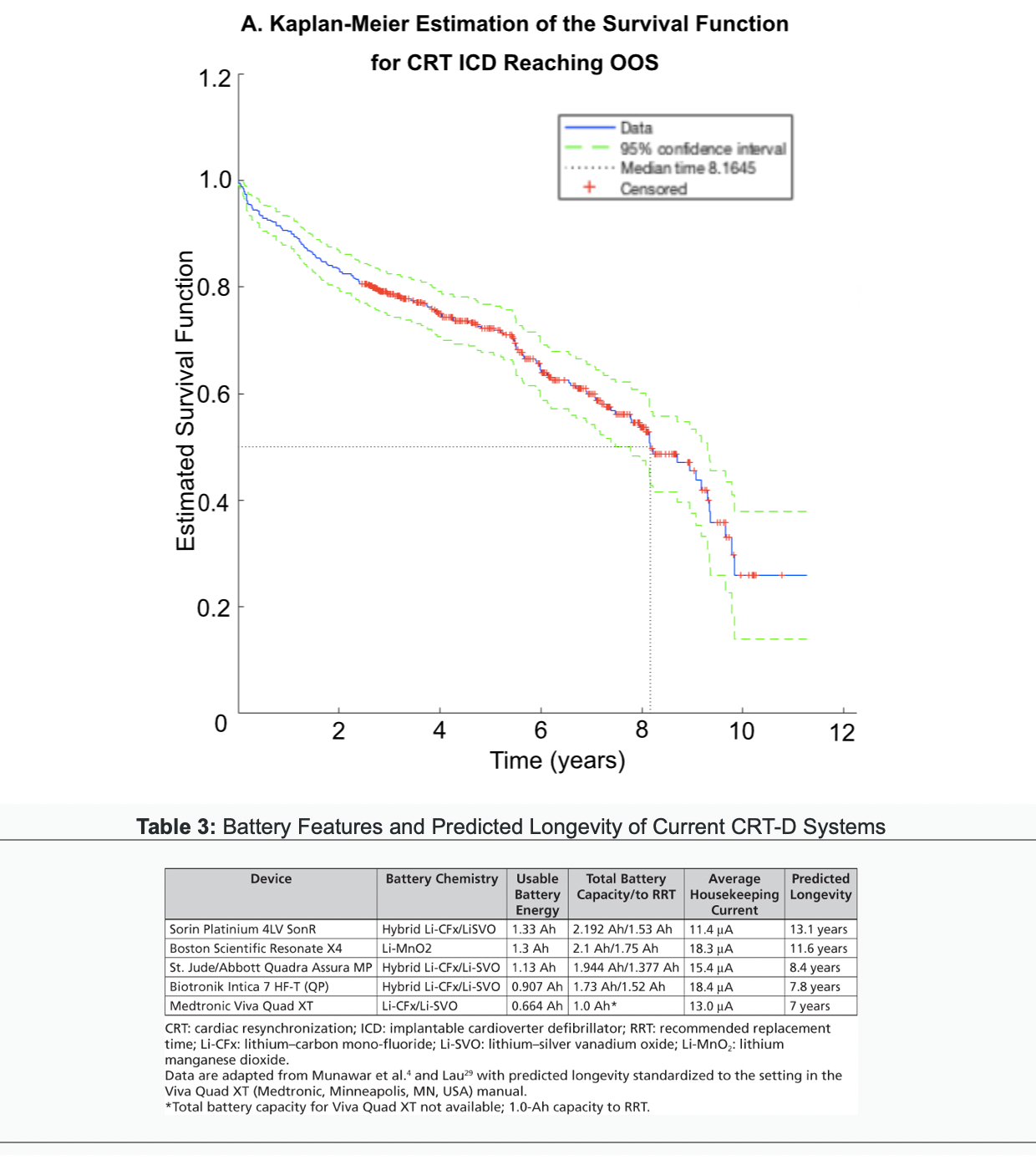
These data demonstrated the first reversal in ICD battery longevity versus patient survival; the 2.1-Ah ICD battery life exceeded patient survival in a typical HFrEF cohort.
Our results support the hypothesis that the acceleration of device OOS during the sixth to ninth years (when it is expected that roughly 98% of 1.0-Ah and 1.4-Ah CRT-D systems reach ERI) may explain the historically high rate of complications for ICD generator changes as compared with at the initial implantation.
During the entire study, only 5.7% of 2.1Ah devices reached the ERI point (average time to ERI: 7.8 ±1.5 years) in up to 10.3 years of follow-up.
Dr. Williams obtained his undergraduate degree with a double major in Biomedical and Electrical Engineering at Vanderbilt University. He was then awarded a Keck Fellowship for graduate school at the University of Pittsburgh where he obtained his Master’s degree in Bioengineering.
Dr. Williams went on to obtain his medical degree at Drexel University in Philadelphia and completed 5 years of Fellowship training in both Cardiovascular Diseases and Clinical Cardiac Electrophysiology at the University of Pittsburgh Medical Center.
His unique background and extensive knowledge of both engineering and cardiology have earned Dr. Williams many accolades in both clinical and academic settings. He’s published over 20 manuscripts and abstracts in the field of cardiology/electrophysiology and has received awards from both the American College of Cardiology Foundation and the National Institutes of Health.
Dr. Williams started in the Invasive Electrophysiology Laboratory at The Good Samaritan Hospital in 2008 and the Heart Rhythm Center published outcomes on pacemaker and defibrillator implantations as well as the safety and efficacy of high frequency jet ventilation during EP studies with ablation under his direction. He is Chair of the Quality Committee at the Florida Chapter of the American College of Cardiology.
View all posts by Heart Rhythm Center

 Heart Rhythm Center